Bhutan, often called the “Land of the Thunder Dragon,” is a country steeped in rich traditions, where religion and culture intertwine beautifully. One of the most colorful and spiritually significant aspects of Bhutanese culture is the Tsechu – a grand festival celebrated in honor of the teachings of Guru Rinpoche (Padmasambhava) and various deities of the Buddhist pantheon. These vibrant festivals, filled with mask dances, sacred rituals, and community celebrations, offer a window into the heart and soul of Bhutanese culture.
What is a Tsechu?
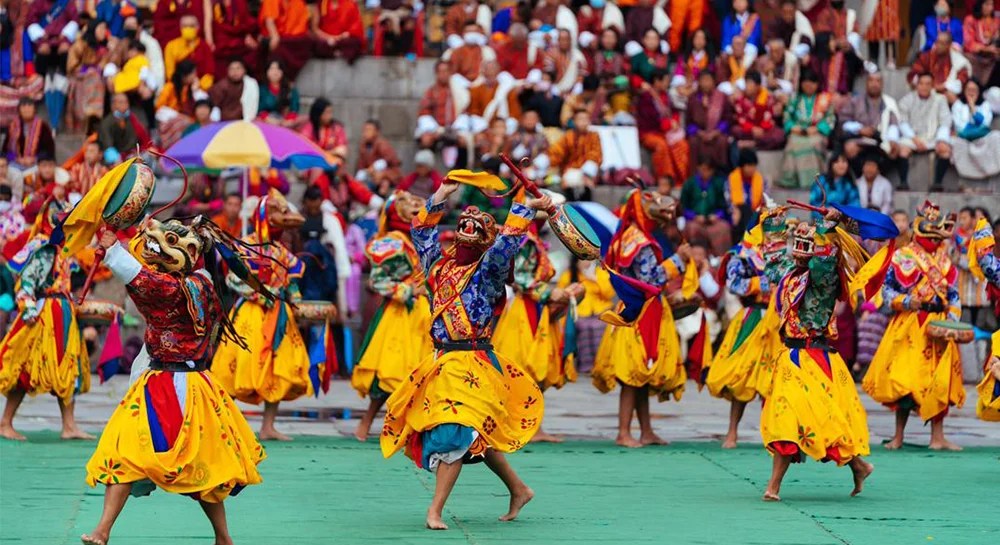
A Tsechu is a traditional religious festival held annually in Bhutanese monasteries, temples, and dzongs (fortresses), typically on the 10th day of a month in the Bhutanese lunar calendar. Each Tsechu is dedicated to a specific deity or event and is a chance for Bhutanese people to gather, celebrate, and honor their spiritual beliefs. The most important feature of a Tsechu is the series of Cham (sacred masked dances), which are performed by monks and lay performers alike. These dances narrate stories of Buddhist teachings, historical events, and moral lessons.
The word “Tsechu” literally translates to “tenth day,” marking the day when Guru Rinpoche is said to have arrived in Bhutan and spread the teachings of Buddhism. Tsechus are held at various dzongs across the country, with each region celebrating its own unique version of the festival.
The Significance of the Tsechu
The Tsechu is not only a religious event; it’s a social occasion that brings together communities. The festival is a time for Bhutanese people to come together, dress in their finest attire, and take part in a deeply spiritual experience. Locals believe that by attending a Tsechu and watching the sacred dances, they can cleanse their minds and souls, earning blessings for the year ahead. For many, it is also a time for family reunions and feasts.
The dances themselves are more than just performances; they carry profound religious significance. They are often based on stories from Buddhist teachings, such as the life of Guru Rinpoche, who is credited with bringing Buddhism to Bhutan. The dances symbolize the triumph of good over evil, with characters representing different deities, demons, and animals. Some dances are intended to cleanse participants of negative karma, while others serve as a form of meditation and prayer.
Key Features of the Tsechu
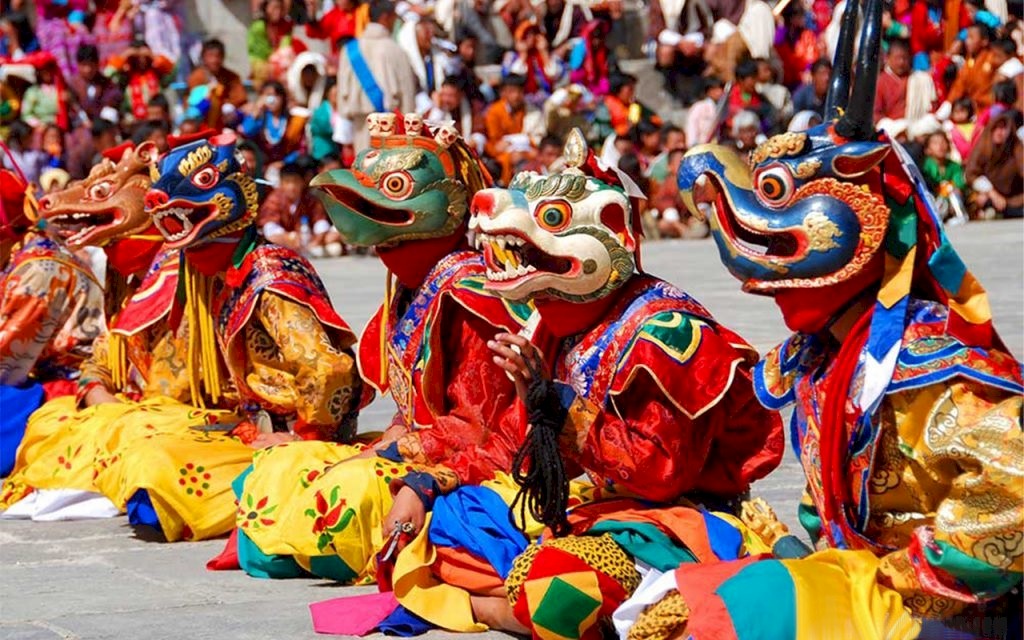
- Cham (Sacred Mask Dances): The most iconic part of any Tsechu is the Cham, a series of ritual dances performed by monks and lay dancers. Each dancer wears a brightly colored costume and a mask depicting different deities or mythical creatures. The dances are accompanied by chants, drums, and cymbals, creating a mesmerizing atmosphere. The most famous Cham is the Raksha Mangcham, or the “Dance of the Ox,” which symbolizes the fight between good and evil.
- The Thongdrel: In many Tsechus, a massive cloth tapestry called a Thongdrel is displayed early in the morning. This cloth features large, intricately woven images of deities and is believed to have the power to cleanse sins and bring blessings to those who view it. The unveiling of the Thongdrel is a significant moment, drawing crowds of devotees who gather early to catch a glimpse of this sacred relic.
- Community Celebrations: While the religious aspects of the Tsechu are central, the festival also serves as a vibrant social event. Locals and visitors alike gather to enjoy the festivities, including traditional Bhutanese food, music, and dancing. People wear their finest gho (men’s traditional attire) and kira (women’s traditional attire), and the event is often a colorful spectacle of textiles and jewelry.
- Spiritual Significance: For the Bhutanese, attending the Tsechu is believed to be spiritually enriching. The festival provides an opportunity to make merit, purify negative karma, and receive blessings for a prosperous life. The Tsechu also plays an essential role in preserving Bhutan’s Buddhist heritage, ensuring that the teachings of Buddhism are passed down through generations.
Famous Tsechus in Bhutan
Bhutan has many Tsechus, each with its own unique characteristics and history. Some of the most notable ones include:
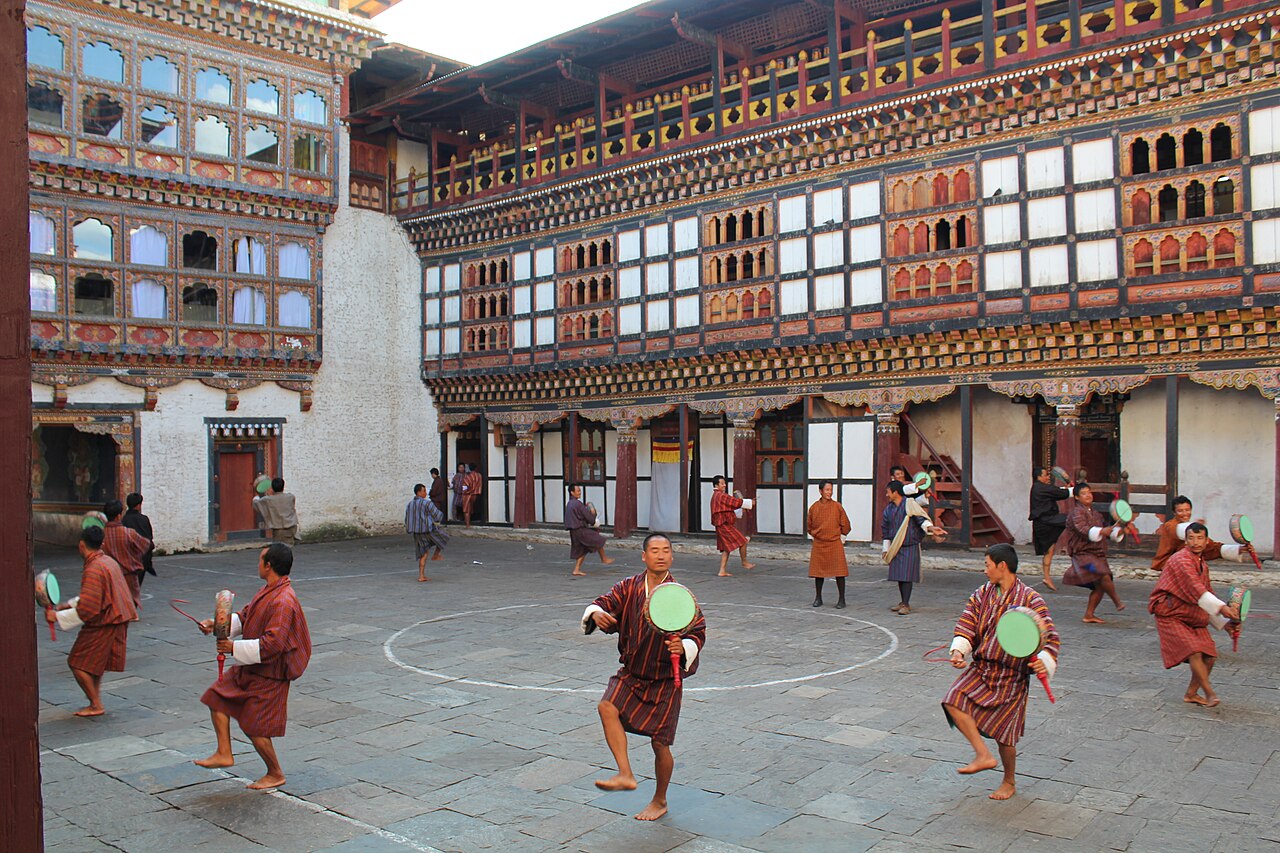
- Thimphu Tsechu: Held annually in Thimphu, the capital of Bhutan, the Thimphu Tsechu is one of the largest and most well-known festivals in the country. It takes place at Tashichho Dzong, the seat of the Bhutanese government and religious center. The Thimphu Tsechu is famous for its grand Cham dances, the Thongdrel, and the vibrant celebration of Bhutanese culture.
- Paro Tsechu: The Paro Tsechu, held at the Paro Dzong, is another major festival that draws thousands of visitors. The highlight of this festival is the unveiling of a massive Thongdrel, which is believed to have extraordinary powers of blessing. The Paro Tsechu is also famous for its picturesque setting, as the dzong overlooks the beautiful Paro Valley.
- Punakha Tsechu: The Punakha Tsechu is held at the Punakha Dzong, located at the confluence of the Pho and Mo rivers. This Tsechu is known for its unique combination of Cham dances, cultural performances, and the grand tradition of people parading in their finest attire.
- Bumthang Tsechu: Held in the central region of Bhutan, the Bumthang Tsechu is a more intimate festival compared to the larger ones in Thimphu and Paro, but it is no less significant. The Bumthang Tsechu is famous for its ancient dances and rituals, many of which have been passed down for centuries.
A Window into Bhutan’s Soul
The Tsechus of Bhutan are more than just festivals; they are living expressions of the country’s deep spiritual and cultural heritage. These celebrations provide a rare opportunity for both Bhutanese and visitors to connect with the rich traditions and profound beliefs that shape the country’s way of life. For anyone fortunate enough to witness a Tsechu, it is an experience that leaves a lasting impression, offering a glimpse into a world where spirituality, community, and culture coexist harmoniously.
As Bhutan continues to preserve its unique way of life amidst rapid modernization, the Tsechus remain an anchor to its past, a testament to the nation’s commitment to preserving its traditions and celebrating its Buddhist faith.
by Debra Bouwer

