Nestled in the rugged landscapes of the Himalayas, where towering peaks touch the sky and traditional lifestyles remain steeped in age-old practices, lies one of Nepal’s most unique and daring agricultural activities: honey harvesting. This is no ordinary honey harvest. The people of Nepal’s remote mountain regions are known for their incredible skill in harvesting honey from wild beehives that cling to perilous cliffs—an ancient tradition that combines bravery, knowledge, and a deep connection to the natural world.
A Dangerous Yet Rewarding Endeavor
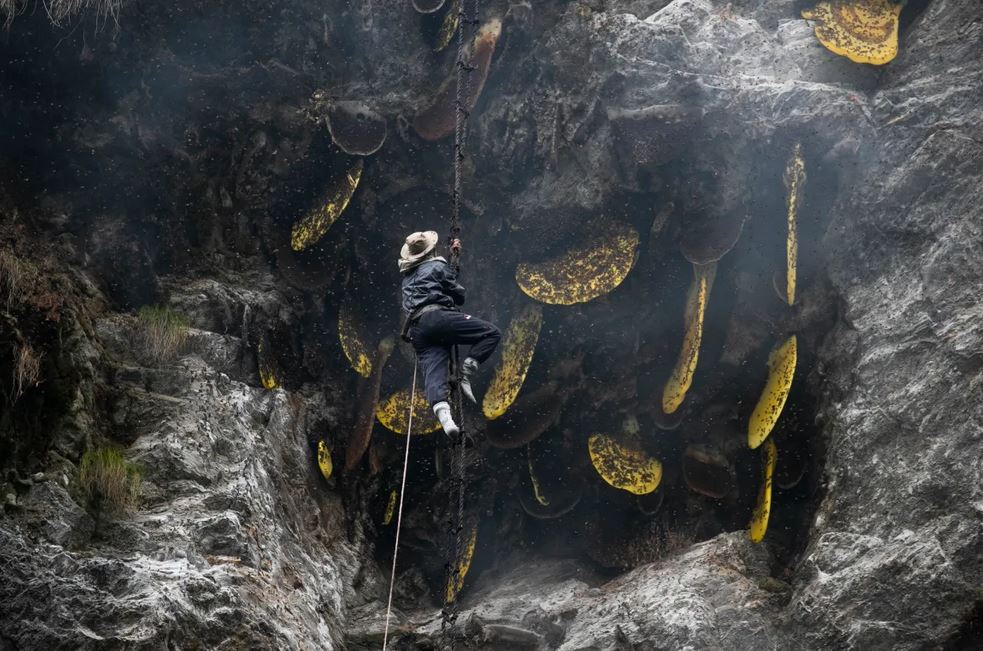
Honey hunting in the Himalayas is not for the faint of heart. The beehives are often found high up on sheer cliffs, sometimes hundreds of meters above the ground, where the honeybees thrive in the harsh, unspoiled environment. These wild bees, primarily of the Apis dorsata species, are large and aggressive, making the harvesting process a dangerous, high-risk venture.
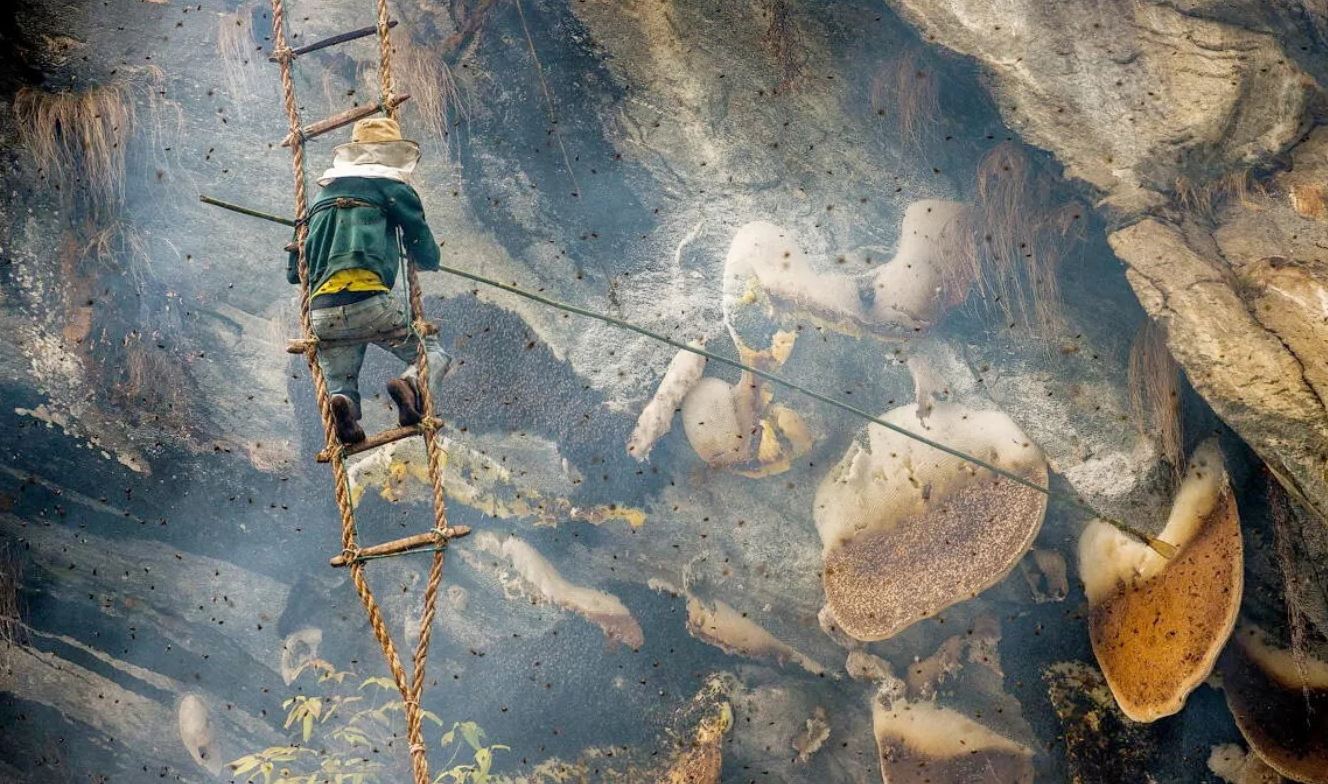
The process of harvesting the honey involves scaling treacherous cliffs, often with little more than ropes and wooden ladders to support the hunters. It requires not just physical strength but also intimate knowledge of the bees’ behavior and the mountain terrain. Honey hunters, typically men from indigenous groups like the Gurung, Magar, and Sherpa communities, spend years learning the intricate art of honey hunting, handed down through generations. This practice is not only a way to gather honey for sustenance, but it is also deeply connected to local customs, spirituality, and a profound respect for nature.
The Sacred and Spiritual Aspects of Honey Harvesting
In the remote Himalayan villages, honey harvesting is not just a livelihood—it is a sacred ritual that is intertwined with spirituality. The honey hunters believe that the act of gathering honey is a form of prayer to the gods and the spirits of the mountains. For the indigenous people of these regions, the mountains are sacred, and the bees are seen as messengers of the divine. The harvest is often performed with ritualistic ceremonies, including offerings of prayers and traditional dances, to ensure a safe and successful hunt.
The honey itself is considered to have spiritual significance. Wild honey harvested from these lofty heights is believed to possess powerful medicinal properties. In these high-altitude villages, honey is used not just as a food source but as a natural remedy for various ailments, from sore throats to digestive issues. It is said that Himalayan honey has a unique taste and health benefits due to the specific flowers that the wild bees pollinate in this pristine environment.
The Harvesting Process: A Test of Skill and Courage
The honey hunters are equipped with minimal tools—long bamboo poles, ropes, and knives—but their knowledge of the landscape and their keen understanding of bee behavior is what truly makes the process possible. The bees build their nests on cliffs or in caves, often in places that are unreachable by ordinary means. To reach the beehives, the hunters must use ropes to climb the cliffs, sometimes scaling almost vertical rock faces with no safety harnesses, relying solely on their strength and agility.
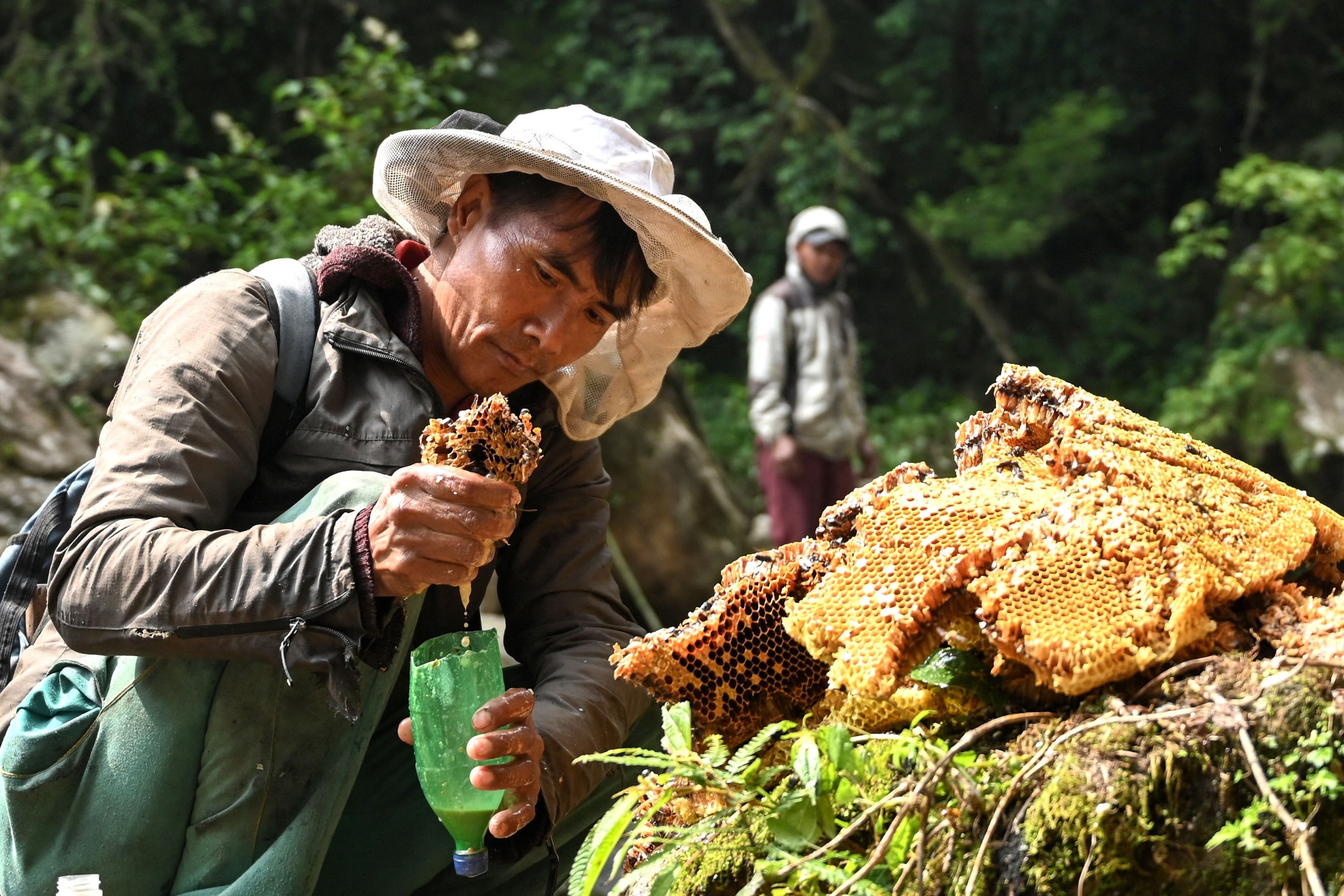
Once they reach the hives, they carefully harvest the honeycomb, using long sticks or knives to detach the combs from the rocks. During this process, the honey hunters must work quickly, as the bees are extremely aggressive and will fiercely defend their hive. Despite the danger, the harvesters wear little protective clothing, relying on speed and precision to avoid being stung.
Once the honeycomb is harvested, it is carefully carried down the cliff and brought back to the village. The honey is then strained, filtered, and stored, ready for consumption or sale. The raw, unprocessed honey from the Himalayas is prized for its purity and its rich, complex flavor, which is a result of the wild flowers and herbs the bees feed on in the mountains.
The Role of Honey in the Local Economy
In these remote regions, honey harvesting plays a crucial role in the local economy. It is not only a valuable food source for the people living in the highlands but also a vital cash crop. The honey is sold in local markets, and it often finds its way to international markets, where it is sold as premium organic honey. The economic importance of honey harvesting has grown in recent years, with international demand for Himalayan honey increasing as more people recognize its unique properties.
However, despite the economic opportunities, the dangers of honey hunting remain, and the practice is becoming increasingly difficult as the younger generation migrates to urban areas for work, leaving behind a declining pool of experienced honey hunters. The future of this tradition is uncertain, with concerns about the preservation of the bees and the survival of the practice itself in an increasingly modernized world.
Honey Hunting as a Way of Life
Honey harvesting in the remote Himalayas is much more than a livelihood—it is a way of life. It reflects a deep respect for nature, an understanding of the fragile balance between humans and the environment, and a cultural heritage that spans generations. The people of these high-altitude villages have lived in harmony with the land and the wild bees for centuries, and the art of honey hunting is a testament to their resilience, courage, and profound connection to the natural world.
Today, as tourism grows in Nepal and people from all over the world come to witness the spectacular landscape of the Himalayas, the tradition of honey hunting has also attracted interest. Tourists eager to experience the ancient practices of the indigenous people can now witness these remarkable honey harvests, though it is still a perilous endeavor that should only be attempted by those with experience.
Impact of Climate Change on Honey Hunting in Nepal
Climate change is increasingly affecting ecosystems worldwide, and the remote Himalayan regions of Nepal, where honey hunting is a centuries-old tradition, are no exception. Changes in temperature, precipitation patterns, and extreme weather events are impacting both the environment and the practice of honey hunting, with significant consequences for local communities and the global honey market.
Environmental Impact of Honey Hunting in the Himalayas
Honey hunting in the Himalayas has both positive and negative environmental impacts. While it supports local economies and preserves ancient traditions, it can disrupt bee populations, damage vegetation, and contribute to soil erosion. Unsustainable practices, like over-harvesting or destruction of hives, can harm biodiversity, while the use of fire for hive access may cause wildfires. However, sustainable harvesting methods and eco-tourism can help mitigate these effects. By practicing responsible honey hunting and preserving bee habitats, communities can protect the ecosystem and ensure the continued health of this vital tradition.
Harvesting honey in the remote Himalayas of Nepal is not just an agricultural practice; it is a cultural, spiritual, and economic tradition that has endured for centuries. Despite the risks involved, the people who practice honey hunting continue to honor their ancestors and the natural world, blending bravery with reverence for the land. In a world that is rapidly changing, honey hunting remains a poignant reminder of the old ways—a tradition that keeps the spirit of the Himalayas alive, one sweet drop at a time.
By Debra Bouwer
tours@nomadicadventures.co.za
 Nomadic Adventures's Blog