Climbing Africa’s tallest mountain is an unforgettable experience—but many climbers ask what they are really paying for. The cost of climbing Mount Kilimanjaro is not just about reaching the top. Your money also helps protect the mountain and support local people.
1. National Park and Protection Fees
A large part of your payment goes directly to Kilimanjaro National Park, which takes care of the mountain.
These fees help pay for:
- Fixing and maintaining trails
- Paying park rangers and staff
- Cleaning campsites and managing waste
- Protecting the forests and higher mountain areas
Park fees usually cost about $800–$1,000 per climber, depending on the route and how many days you spend on the mountain.
2. Wages for Guides, Porters, and Cooks
Climbing Kilimanjaro requires a strong support team. Your fees help pay fair wages for:
- Trained mountain guides who keep you safe and lead the way
- Porters who carry tents, food, and equipment
- Cooks who prepare meals during the climb
Each climber is usually supported by 3–5 crew members. Good trekking companies make sure porters are paid fairly and treated well.
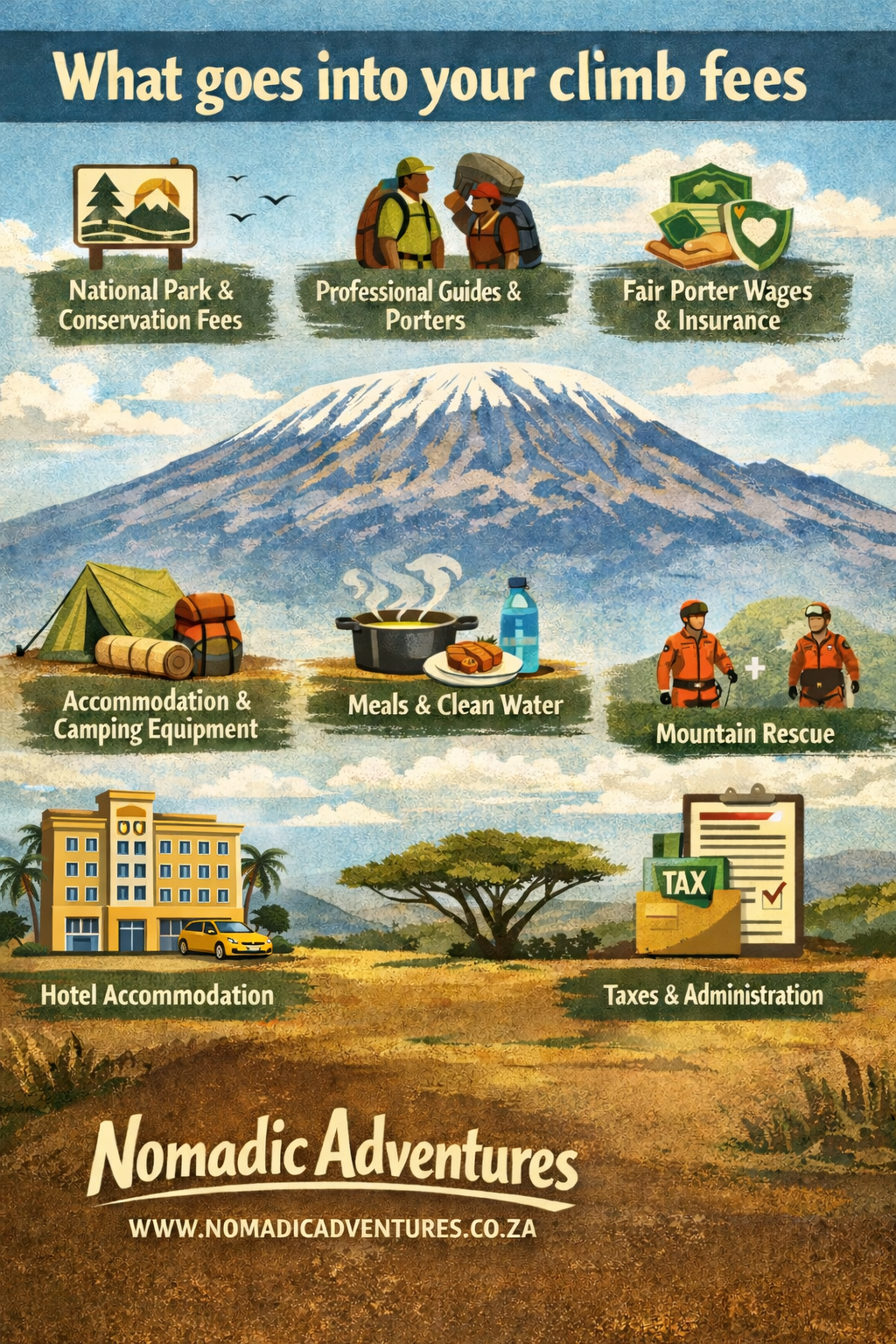
3. Camping and Transport
Most Kilimanjaro climbs involve camping. Your fees help cover:
- Tents and sleeping gear
- Cooking equipment and food
- Campsite charges
- Transport to and from the mountain
All supplies must be carried up the mountain, which adds to the overall cost.
4. Government Taxes and Rules
Climbing activities are managed by the government of Tanzania. Part of your payment goes toward:
- Tourism taxes
- Permits and park management
- Road and facility improvements in the area
Tourism is very important to Tanzania’s economy, and Kilimanjaro plays a big role in that.
5. Community and Environmental Support
Many responsible trekking companies also use part of their income to support:
- Tree planting projects
- Schools and health services in local villages
- Clean water projects
- Organizations that protect porter rights
Your climb helps both the environment and the communities around Kilimanjaro.
Quick Summary: Where Your Kilimanjaro Fees Go
For a typical $2,000–$3,000 climb, the cost is usually divided like this:
- 40–50% – Park fees (entry, camping, protection)
- 20–30% – Wages for guides, porters, and cooks
- 10–15% – Food, camping gear, and transport
- 5–10% – Government taxes and permits
- 5–10% – Company costs and community support
Climbing Kilimanjaro is more than just paying for a hike. Your money helps protect the mountain, create jobs, and support responsible tourism on one of the world’s most famous peaks.
For more information on Kilimanjaro go to https://www.nomadicadventures.co.za/Kilimanjaro-Climbing-Tours.html
 Nomadic Adventures's Blog