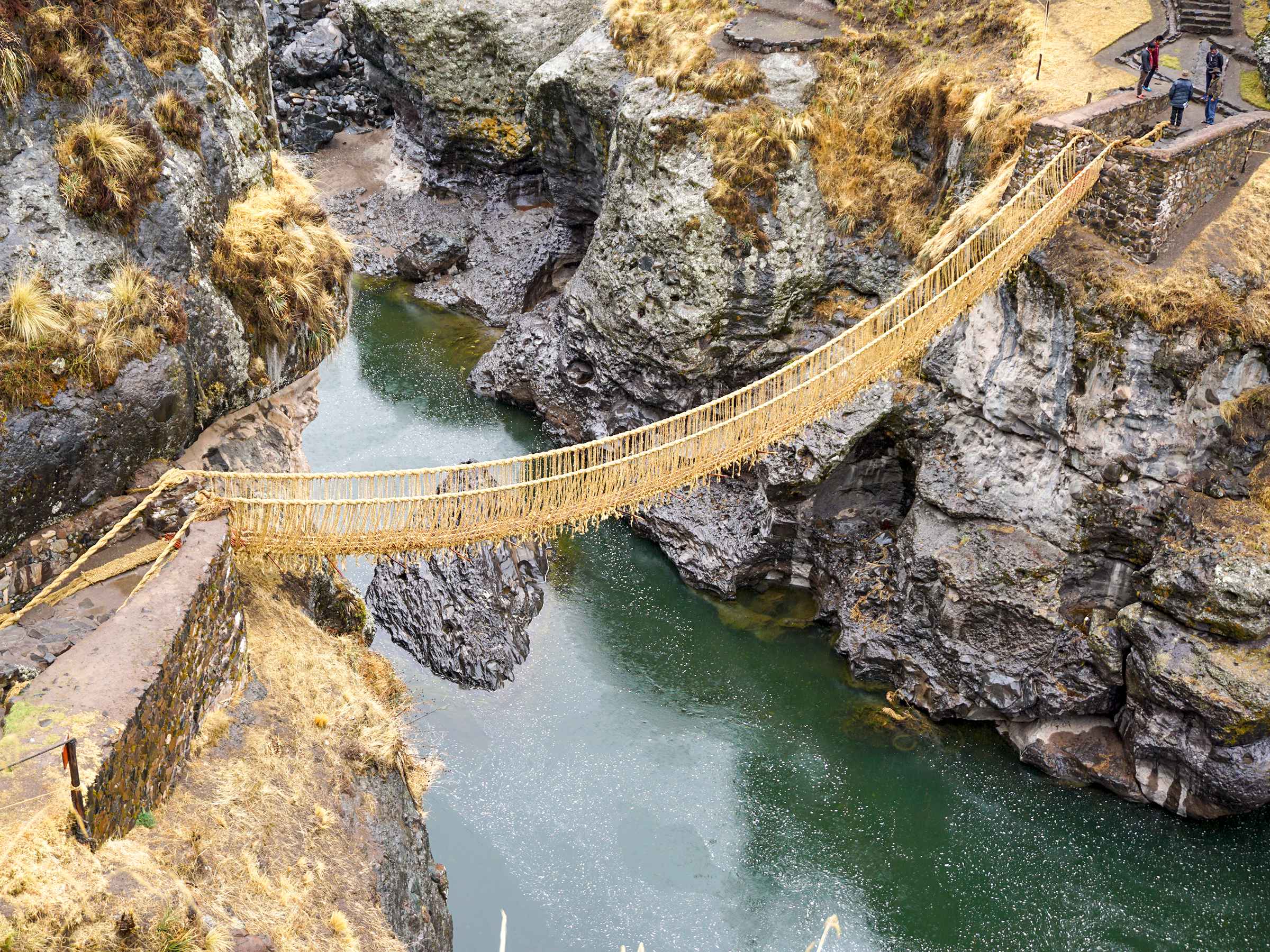
Nestled amidst the rugged grandeur of Peru’s Andean highlands, the Q’eswachaka Rope Bridge stands as a testament to both ancient engineering prowess and enduring cultural traditions. But beyond its physical structure lies a deeper layer of significance—one that is woven with myth, spirituality, and community. Every year, the Quechua people come together in a vibrant celebration known as the Q’eswachaka Renewal Ceremony, breathing new life into this centuries-old marvel.
A Bridge Between Worlds:
Legend has it that the Q’eswachaka Bridge is more than just a means of crossing the Apurimac River—it is a sacred link between the earthly realm and the domain of the mountain deities. According to Quechua mythology, the bridge is imbued with the spirit of Apu Q’eswachaka, the guardian deity of bridges and pathways. It is said that the bridge was bestowed upon the Quechua people as a gift from the gods, a symbol of protection and unity.
The Annual Renewal Ceremony:
Each year, usually in June, the Quechua communities from the villages of Quehue, Chaupibanda, Choccayhua, and Ccollana gather at the site of the Q’eswachaka Bridge to participate in the renewal ceremony. This sacred event is a time-honored tradition that dates back over six centuries, embodying the collective spirit and resilience of the Andean people.
The ceremony begins with invocations and offerings to Apu Q’eswachaka, led by shamans and spiritual leaders who seek blessings for the safety and prosperity of the bridge and its travelers. Participants then embark on the arduous task of dismantling the old bridge, strand by strand, and weaving a new one from ichu grass—a process that requires skill, coordination, and communal effort.
As the bridge takes shape, the air is filled with the rhythmic beats of drums, the melodious strains of panpipes, and the joyous laughter of participants. Rituals, chants, and dances abound, celebrating the bridge’s mythic origins and cultural significance. For the Quechua people, the renewal of the bridge is not just a practical necessity but a spiritual journey—a symbolic reconnection with their ancestral roots and the natural world.

A Celebration of Culture and Community:
The renewal ceremony is also a time for cultural exchange and solidarity among the Quechua communities and visitors alike. Participants share stories, traditions, and communal meals, fostering bonds of friendship and mutual respect. As the final strands of grass are woven into place and the bridge is deemed sturdy and secure, there is a collective sense of accomplishment and pride—a testament to the enduring resilience of indigenous cultures.
Travel Tips for the Journey:
For those inspired to witness the Q’eswachaka Renewal Ceremony firsthand, here are some essential travel tips to enhance your experience:
- Plan Ahead: Research the timing of the annual ceremony and make arrangements accordingly. June is typically the best time to visit, but be sure to check local calendars for specific dates.
- Respect Local Customs: Remember that you are a guest in the Quechua communities’ homeland. Respect their traditions, customs, and sacred sites, and seek permission before taking photos or participating in rituals.
- Prepare for Altitude: The bridge is located at high altitude, so acclimatize slowly and stay hydrated to avoid altitude sickness.
- Pack Essentials: Bring sturdy footwear, layers for changing weather conditions, and plenty of water and snacks for the journey.
- Embrace the Experience: Open your heart and mind to the rich tapestry of culture, myth, and spirituality that surrounds the Q’eswachaka Rope Bridge. Immerse yourself fully in the experience and let its magic leave a lasting impression on your soul.
Embarking on a pilgrimage to the Q’eswachaka Rope Bridge is not just a physical journey—it’s a spiritual odyssey through time and space. As you witness the ancient rituals and traditions come to life, may you be filled with a sense of wonder, reverence, and deep appreciation for the wisdom of the Andean people.
By Debra Bouwer
 Nomadic Adventures's Blog