There is a silence on Mount Kilimanjaro that speaks louder than any words—it does not demand your attention, it earns it. When you step onto the Machame Route, often called the “Whiskey Route” for its blend of beauty and challenge, you’re not just embarking on a physical ascent. You begin to peel back the layers of yourself—ego, identity, assumption. The climb is not upward. It is inward.
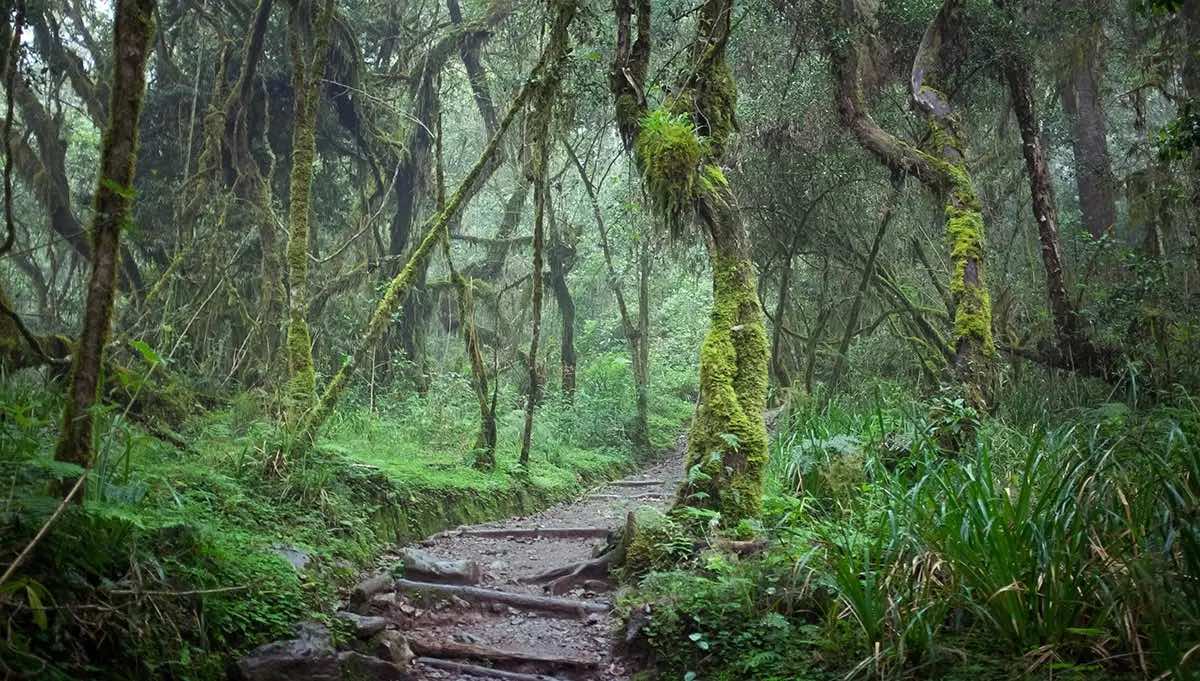
Anticipation hums in the air. The forest speaks in soft rustles as birds flutter to and fro. The Chagga people once believed Kilimanjaro was the dwelling place of gods—its snows a guarded secret, its summit a realm where mortals were never meant to tread. Some still say the mountain chooses who reaches its peak. As you move through this myth-laden forest, the air feels charged, as if the mountain is watching, waiting. Every step forward begins a subtle unraveling: of control, of pace, of certainty.
The days stretch on. Forest gives way to moorland. Moorland to alpine desert. Vegetation thins, but something inside you grows—an awareness, a stillness, a surrender. You begin to speak less. You begin to listen more: to the wind through the grass, to the sound of your breath, to your own heartbeat against the quiet.
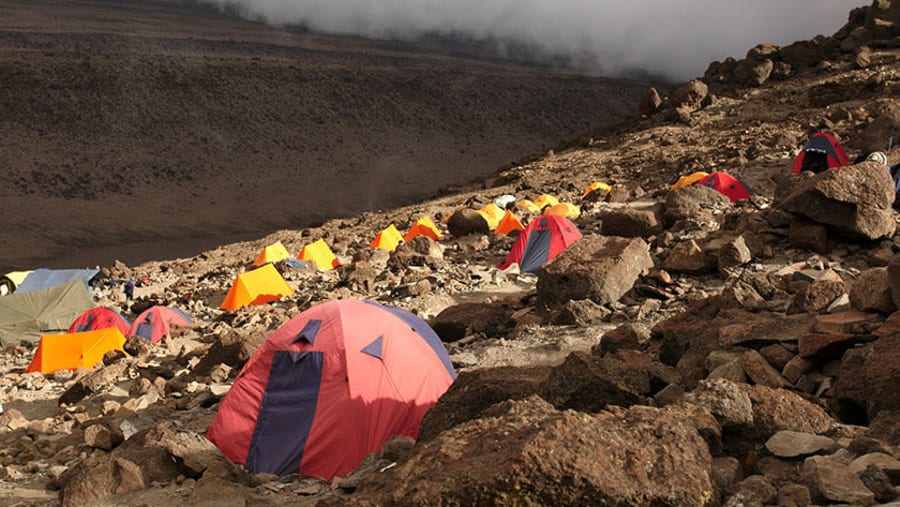
At Shira Camp, the world opens into something otherworldly—broad and wind-scoured beneath the looming presence of Kibo. The plateau stretches vast and open, scattered with ancient volcanic rock and the hushed remnants of a lava field frozen in time. Jagged boulders and caves dot the landscape like scars from a long-forgotten battle. The air is thinner, crisper, edged with silence. And as the sun sinks behind the shoulder of the mountain, the sky begins to burn.
As you climb higher toward Lava Tower, the terrain shifts noticeably. The lushness of the moorland fades into a rugged, rocky expanse where volcanic scree crunches beneath your boots. The air grows thinner and colder, and the landscape takes on a stark beauty—scattered boulders and jagged rocks rising like the ribs of an ancient beast.
Amid this raw landscape, crows hop busily among the stones, their sharp eyes scanning for scraps or insects stirred by your passing. Field mice dart between crevices, quick and cautious, disappearing as soon as you near. Their tiny movements remind you that life endures even in this harsh terrain, resilient and quietly persistent.
Lava Tower itself looms ahead—a towering volcanic pinnacle rising abruptly from the plateau—a reminder of the mountain’s violent, fiery origins. Standing beside it, you feel both humbled and energized, a fleeting moment of rest before the final, grueling ascent toward higher camps.
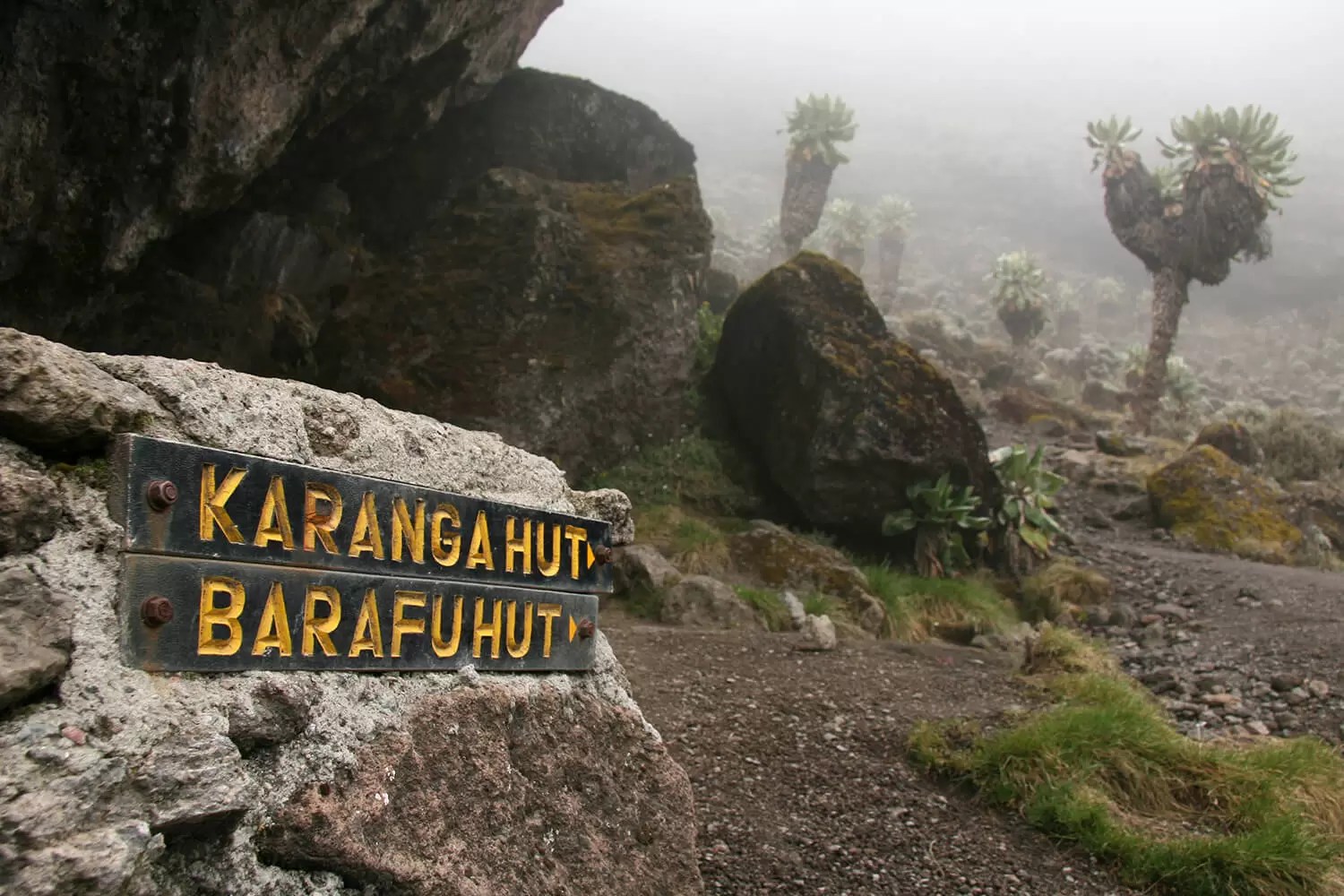
But the mountain teaches in layers. As you gain altitude, discomfort becomes familiar. Sleep turns thin. Appetite dulls. Barranco looms ahead, followed by endless valleys. Thoughts quiet. You begin to understand that altitude is not just thinner air—it’s thinner ego. You’re forced to be present because anything else is too heavy to carry.
Then, summit night.
The world narrows to a small circle of light from your headlamp, a field of stars above, and the rhythm of boots crunching frozen scree. In the thin air, even thought becomes effort. But then—there’s the distant sound of a guide’s radio, beating out a steady rhythm in the dark, like a heartbeat transmitted through the air. It anchors you, hypnotizes you. Ahead, the trail becomes a procession of headlamps, endless and winding, snaking up the mountainside like fireflies chasing the dawn.
Each step becomes deliberate, sacred. One breath in—step. One breath out—step. You lose yourself in it—the quiet march, the silence between your breaths, the slow and stubborn persistence of bodies moving together toward something immense.
And then, slowly, the sky begins to shift. Not with light at first—just a subtle deepening of the blue along the horizon. Then, warmth seeps in, casting orange, red, and gold across the morning sky. As the sun rises, Mawenzi—the jagged sister peak and once a fierce volcano itself—stands stark and unyielding, ancient and proud, a living monument not just to the land, but to the stories it holds. Below, the sea of clouds ignites in flame, and for a brief, breathless moment, you find yourself caught between earth and sky, between breath and awe.
But the mountain is not finished with you yet.
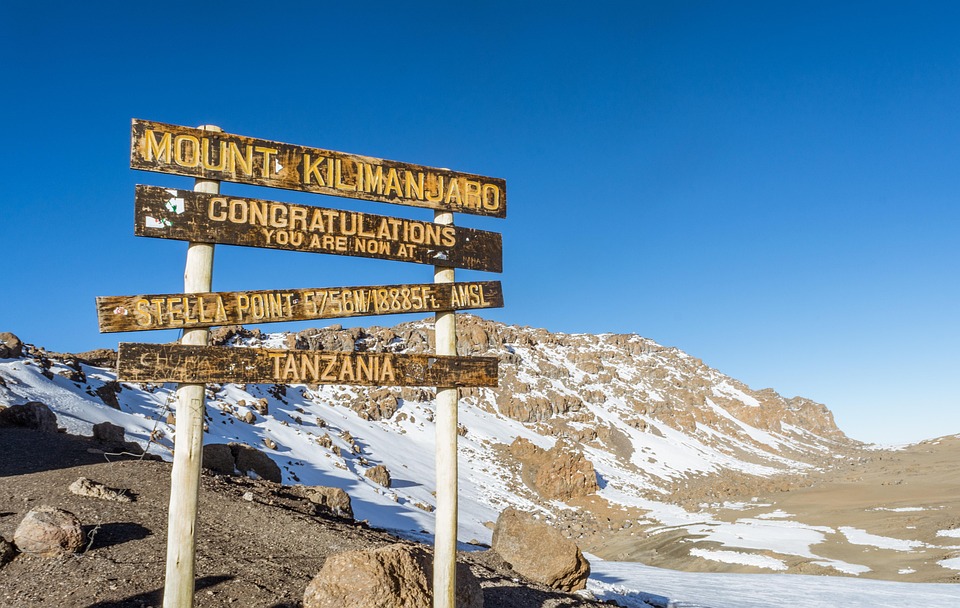
The path steepens toward Stella Point, the final curve before the summit ridge. Snow crunches underfoot, and ice clings to the rocks like bone. The pull becomes more than gravity—it’s the weight of fatigue, the thinness of air, and the haunting knowledge that even here, with the sky turning gold, you are still 200 vertical meters from Uhuru.
To your right, the great volcanic crater opens like a sleeping god’s mouth—silent, vast, and desolate. To your left, the ancient glaciers glow in the morning light, fractured and ghostly, slowly dying in the warming breath of the earth. Their silence carries a warning, and a kind of sorrow.
And yet, something pulls you forward—not from inside, but ahead. Your focus narrows again, this time not on your own breath, but on the rising sound of joy. Of voices cracking in relief. Of laughter and cries. Of guides clapping and the bustle of people in the wind. You hear it before you see it—the small wooden sign, unassuming and world-famous, marking the highest point in Africa.
Uhuru Peak.
And just like that, the final steps arrive—not with triumph, but with quiet disbelief. Not a conquest, but a communion. You stand not above the world, but within it. The snows of Kilimanjaro shine under the morning sun, and something ancient whispers in the wind.
You do not leave the same way you came.
By Debra Bouwer: Book now on tours@nomadicadventures.co.za
 Nomadic Adventures's Blog