Climbing Mount Meru in Tanzania is a thrilling adventure that combines breathtaking scenery with the challenge of navigating steep, rocky terrain. At 4,566 meters, Mount Meru is the second-highest peak in Tanzania and is often overshadowed by its more famous neighbor, Kilimanjaro. Despite being underrated, it offers an unforgettable climbing experience, showcasing a horseshoe-shaped volcanic crater with a narrow ridge that provides superb views in every direction. My first urge to climb Mount Meru came one afternoon when I was standing with my dad at Shira Camp en route to the summit of Kilimanjaro. There it was, sticking its head out above the clouds, and together we decided that Mount Meru would be our next adventure.
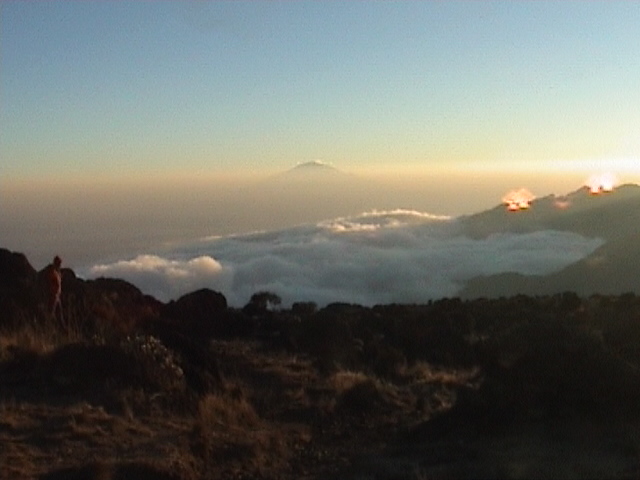
The mountain features dramatic cliffs along its inner wall that plunge over 1,500 meters below the summit. Nestled within the caldera is the Ash Cone, a subsidiary peak standing at 3,670 meters, which last erupted in 1910. The rich biodiversity of trees and plants along the trails adds considerable interest to the trek, inviting climbers to immerse themselves in the stunning landscape.
Part of Arusha National Park, Mount Meru’s lower slopes teem with a variety of wildlife. Accommodation along the trek consists of two well-maintained wooden huts, Miriakamba and Saddle Hut, each offering spectacular views of Kilimanjaro rising majestically above the clouds.
Our journey began at the park entrance, where climbers gathered to prepare for the adventure ahead. The atmosphere was electric with excitement as trekkers assembled at the park hut, all kitted out for the ascent. Although we arrived with our own mountain guide, the first two days were guided by an informed and armed park ranger, ensuring safety during close encounters with wildlife. The first part of the trek was along dirt roads under the sweltering African sun. Then suddenly our ranger veered off into the dense forest. At a much quicker pace than on Kilimanjaro, the first stage of the climb took us through an enchanting forest section, where old weathered trees loomed overhead and vibrant vegetation thrived. As we moved deeper into the forest, we began to encounter wildlife, including playful monkeys and colorful birds flitting between branches. The lower slopes of Mount Meru shelter a variety of wildlife, and the trails below Miriakamba Hut often felt more like walking safaris than traditional mountain climbs. At one stage, two giraffes seemed to peer down at us as curious onlookers while buffalo grazed on a section slightly lower than us. This means that yes, you can expect to see buffaloes, warthogs, monkeys, and numerous bird species, with giraffes and elephants on the trek.
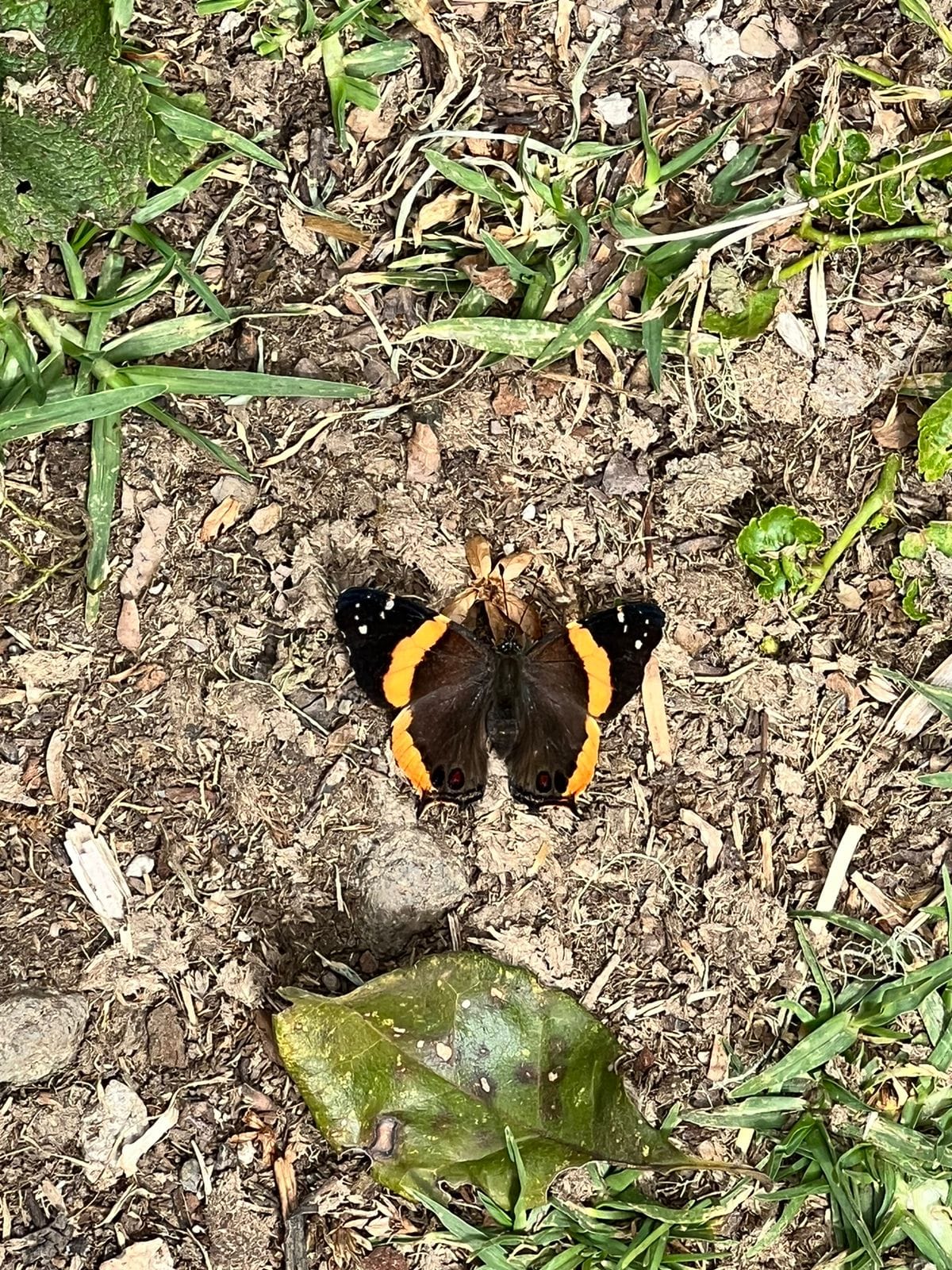
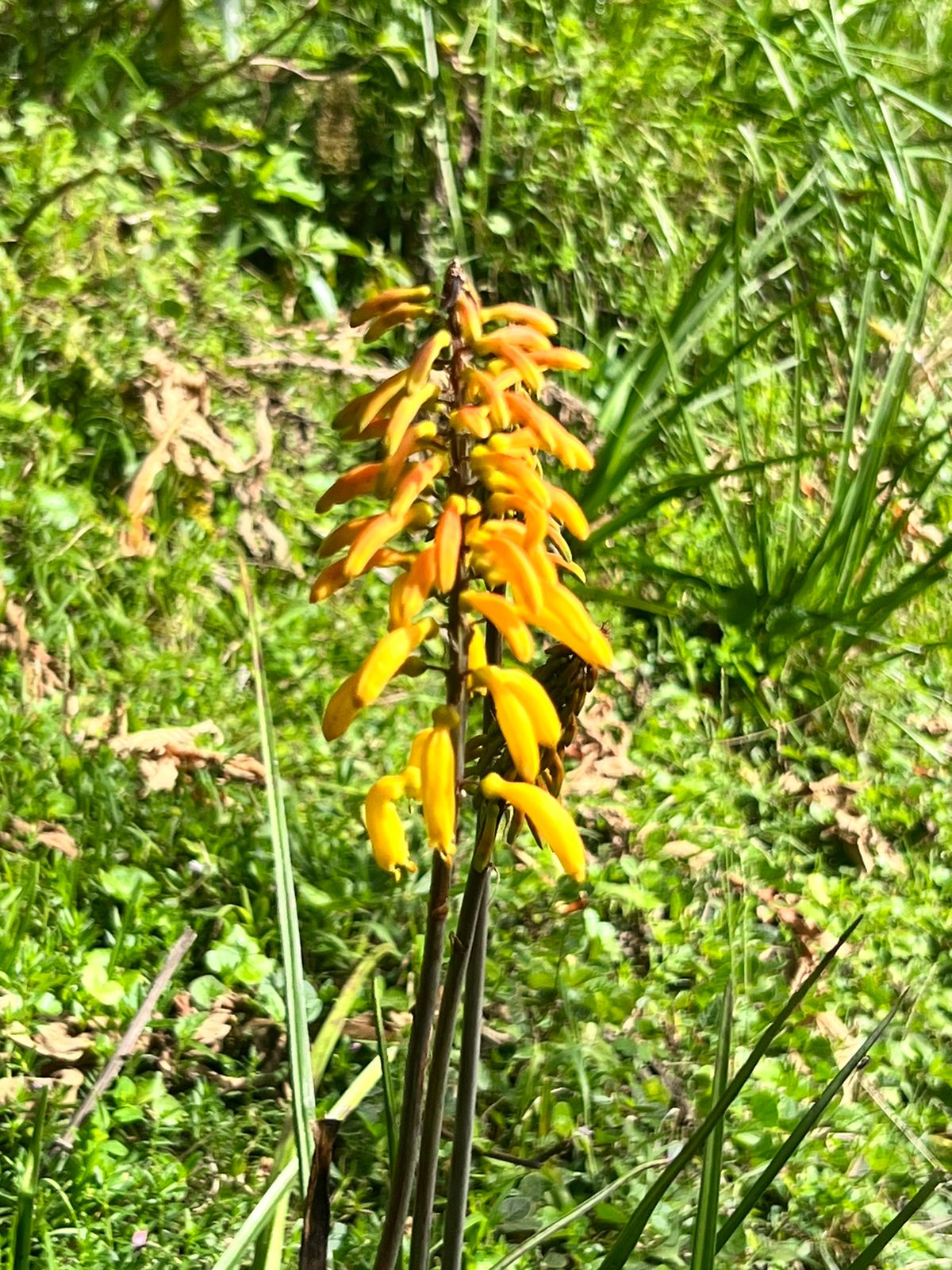
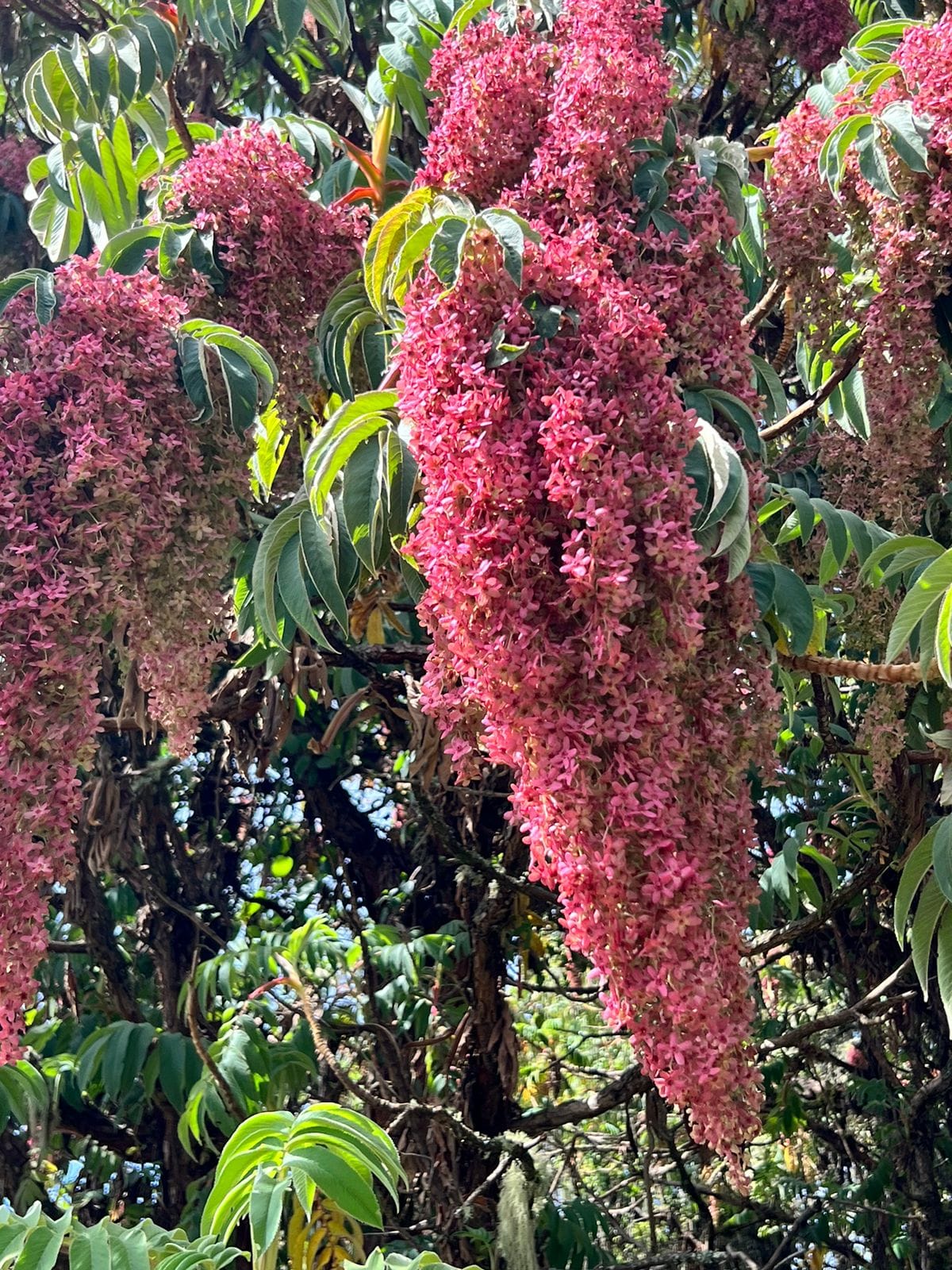
After several hours of hiking, we arrived at the first hut, a cozy lodge nestled among the trees. The revamped Miriakamba Hut is excellent, featuring two bunk houses, each with separate four-bed rooms, and a dining room. Here, climbers can rest, recharge, and soak in the tranquil surroundings before continuing their journey.
The next day, the ascent grew steeper as we left the forest behind and entered rocky, drier terrain. The views began to open up, revealing stunning panoramas of the surrounding landscape and the iconic silhouette of Mount Kilimanjaro in the distance. The trail became more challenging, with loose rocks and steep inclines testing our endurance.
The second hut was a welcome sight and also provided a chance to do a short acclimatization hike in the afternoon before settling in for a few hours of pre-summit rest. After reaching the second hut, climbers typically rested for the night, preparing for a summit attempt that began in the early hours. The plan was to reach the summit before sunrise, allowing us to experience the breathtaking moment when the first light spilled over the horizon. As night fell, climbers donned headlamps and gathered their gear, feeling a mix of excitement and nerves.
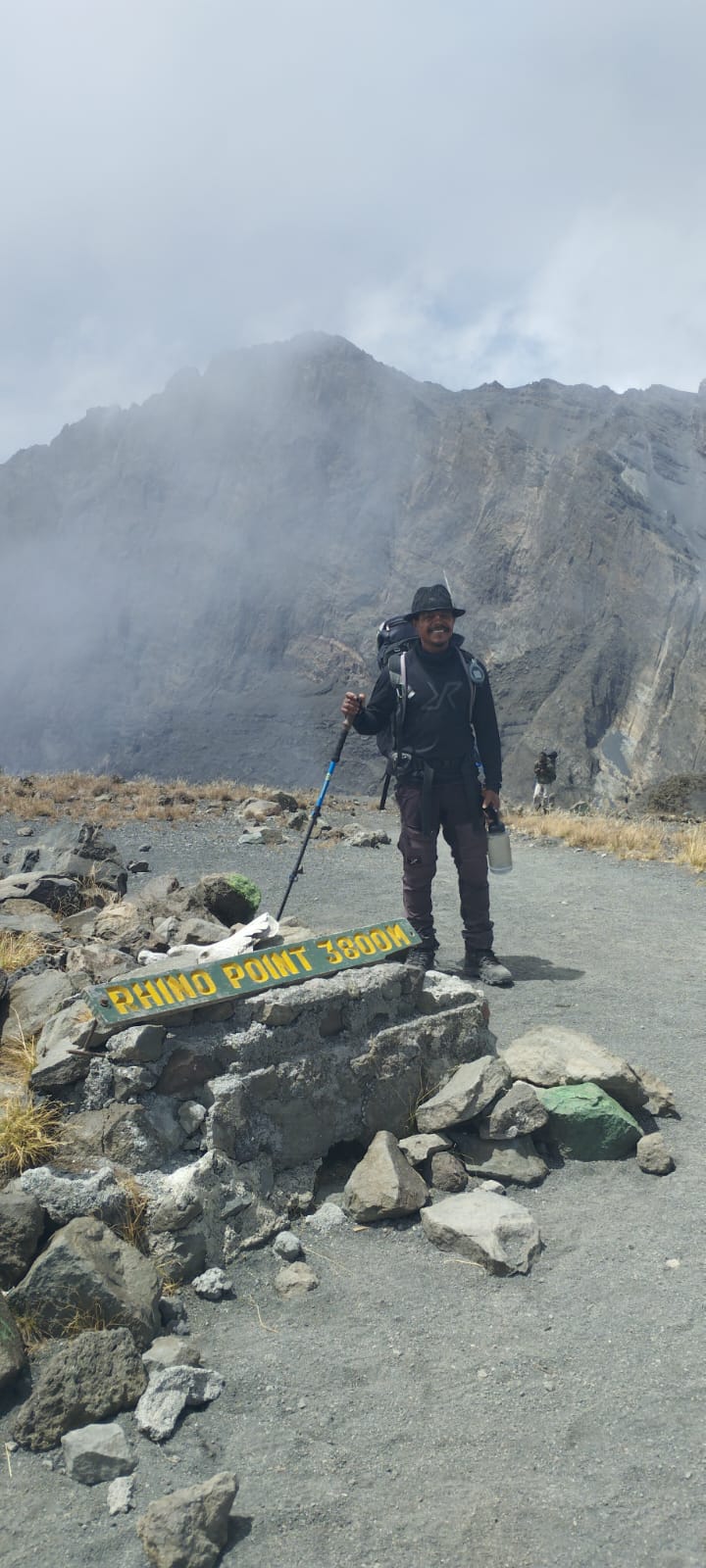
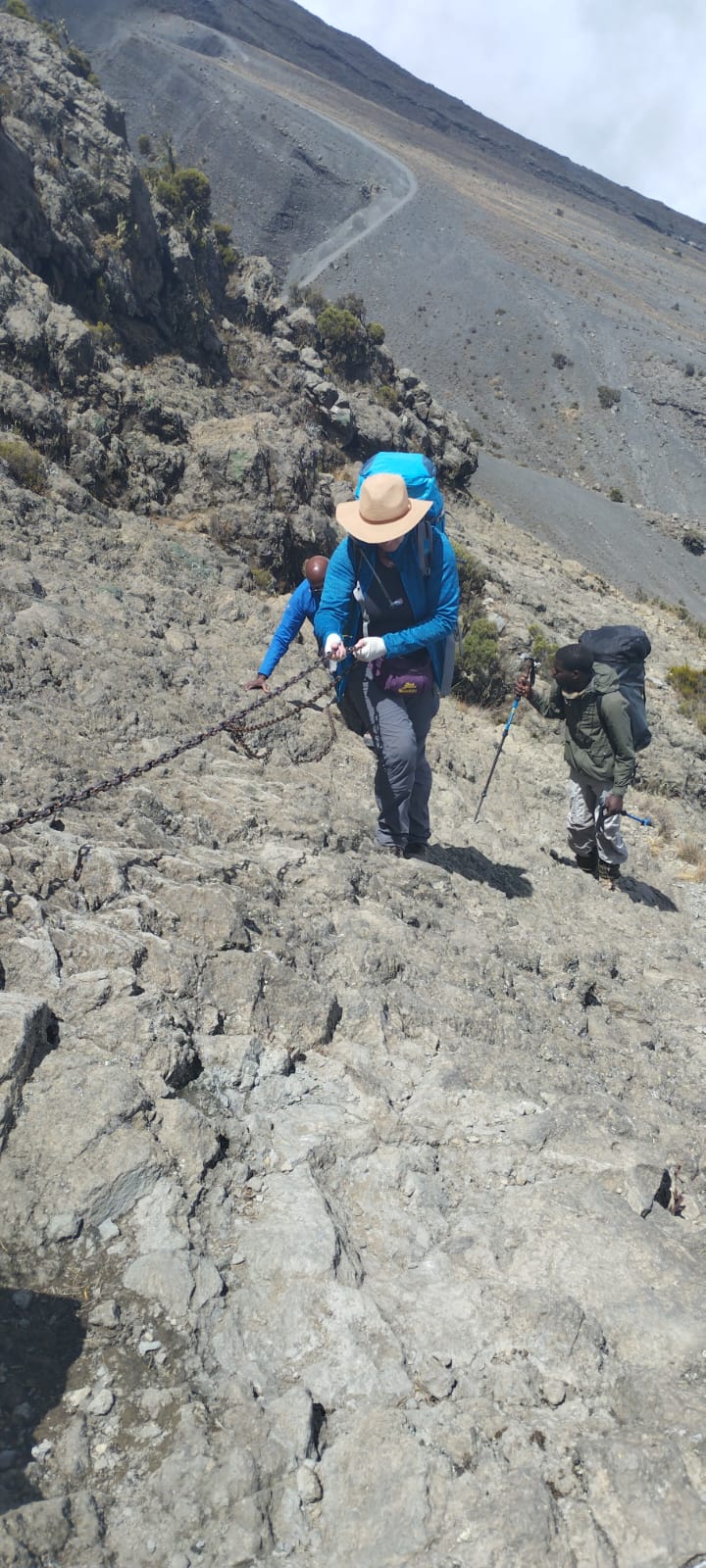
Setting off into the darkness, we navigated moonlit narrow paths lined by large bushes, which seemed quite serene, casting shadows from our headlamps. The air was thin, and every breath felt heavier as we climbed higher. Eventually, far above, we began to see the notorious chain sections—steep and exposed areas where chains are fixed to help climbers across narrow ridges. With the mountain cloaked in darkness, this part of the ascent became even more daunting.
The chain sections are challenging enough during the day, but in the dark, they feel even more treacherous as we gripped the now icy cold chains and balanced our way across the ridge. From there, the climb took us down the side of a ridge to another section of icy cold chains that seemed to descend into nowhere. Yes, descend. Having climbed up to this point, the route then headed down a rock section where chains helped us descend. In the quiet of the night, the nervous chatter and the clinking of chains on rock created an interesting cacophony of sounds.
After navigating the chains and the rocky stretch that followed, we finally crested the summit ridge. The sun began to rise, painting the sky in hues of orange, pink, and purple—a breathtaking spectacle that made every grueling step worth it. The summit point stretched endlessly on the horizon as we climbed higher through rocky sections and over boulders. Eventually, as the sun started to crest the horizon, a wave of exhilaration took over as we looked out across the endless views. The panoramic vistas were staggering; clouds rolled beneath us, and the caldera of the nearby volcano loomed majestically, while Mount Kilimanjaro stood proud in the distance, approximately 80 kilometers to the northeast.
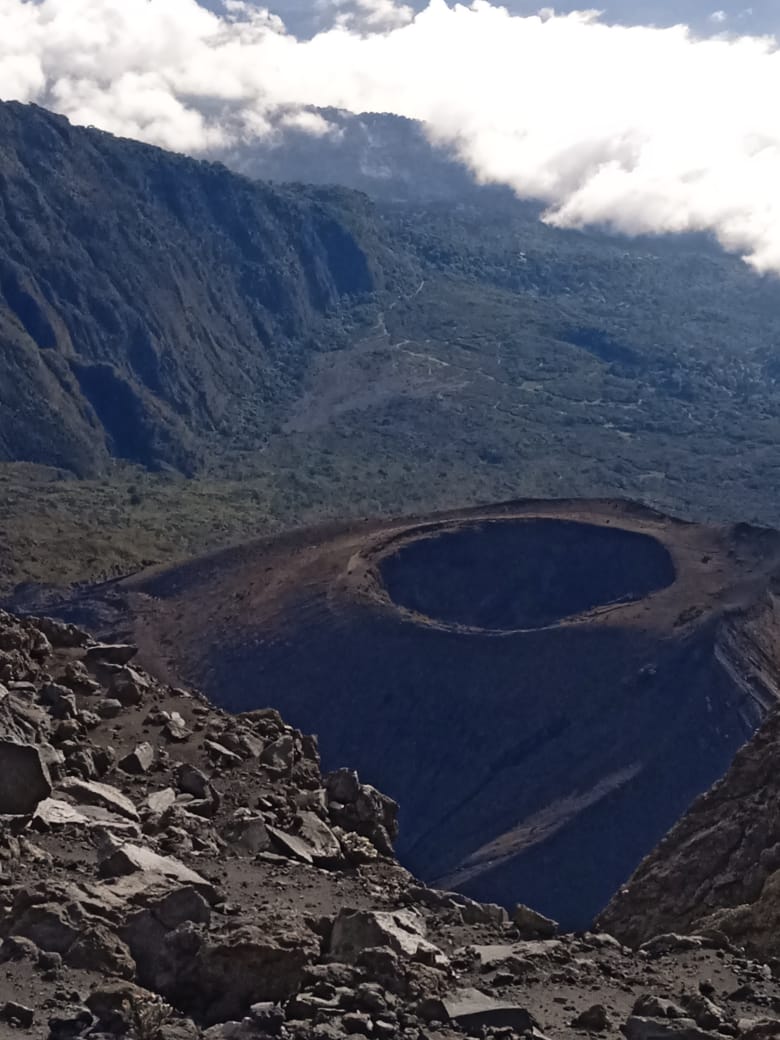

The moment was surreal; the hard work, the challenges, and the dark hours of climbing all coalesced into a profound sense of achievement and awe. The grandeur of the landscape, the serene beauty of the sunrise, and the sheer thrill of standing atop such a majestic peak filled us with a deep, lasting satisfaction.
Descending from the summit, the views became even more vivid as the morning light revealed the intricate details of the landscape. The rocky terrain and lush valleys were bathed in golden light, and the vibrant beauty of Arusha National Park unfolded before us. The trek down offered a new perspective on the dramatic terrain we had conquered, making it clear that Mount Meru is not just a climb, but a truly immersive experience in one of Tanzania’s most beautiful and untamed corners.
In the end, climbing Mount Meru is a journey of discovery, not only of the mountain itself but also of one’s own resilience and capacity for wonder. The challenges faced and the breathtaking vistas experienced make it an adventure that lingers in memory long after the descent.
 Nomadic Adventures's Blog